I think we can tighten our pencil a bit
Posted: June 22, 2018 Filed under: Uncategorized | Tags: crunch the numbers, humor, malaphor, sharpen the pencil, tighten up, words 1 CommentAn architect was discussing changing pricing during negotiations and uttered this malaphor. I believe it is a combination of “sharpen our pencil” (give a good deal) and “tighten up” (to become more restrictive or miserly). “Crunch the numbers” (doing calculations) might also be in the mix, although it doesn’t fit within the context. Yvonne Shipley suggests “tighten our belts” might also have been on the speaker’s mind. I think that is very possible. A shout out to Jim Washabaugh for hearing this one and passing it on!
Shudder in its tracks
Posted: June 20, 2018 Filed under: Uncategorized | Tags: Ars Technica, expressions, freeze in its tracks, humor, malaphor, malaphors, shudder to think, stop dead in its tracks, words Leave a commentThis was found in the Ars Technica website, a site covering news and opinions in technology, science, and politics. Here is the full quote:
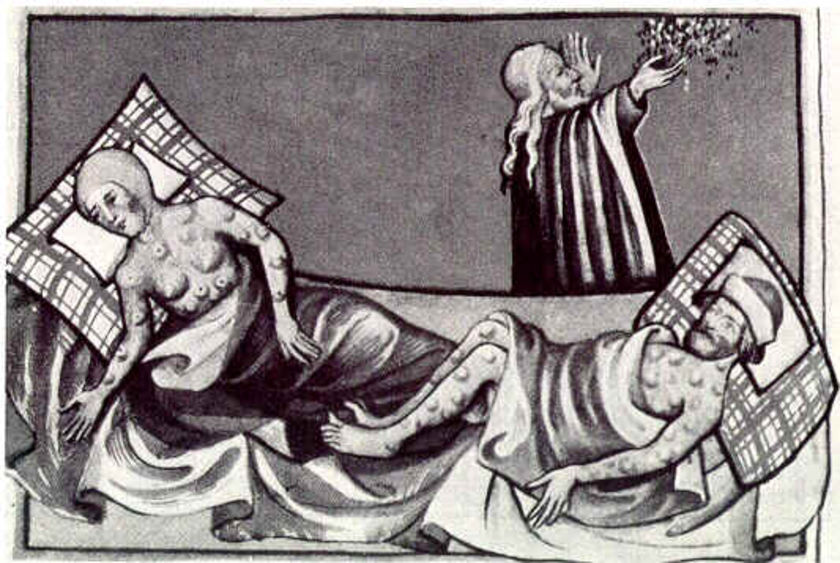
“That ruthlessly efficient system helped bubonic plague kill nearly 25 million people and made the ancient world shudder in its tracks during the Justinian plague of 541–542.” https://arstechnica.com/science/2018/06/4000-year-old-genomes-point-to-origins-of-bubonic-plague/
It is a conflation of “shudder to think” (afraid to think about something as it may be unpleasant) and “stop/freeze/halt (someone or something)(dead) in its tracks” (suddenly stop because something has frightened or surprised you). Considering the context, the author might have been thinking about death and the word “dead” may have been floating around in the head, spewing out “in its tracks”. A big thanks to Barry Eigen for spotting this one. Barry said the malaphor also reminded him of the expression “shaking (shivering) in their boots”. Me too!
I hope my omelet is not bone cold
Posted: June 18, 2018 Filed under: Uncategorized | Tags: chilled to the bone, dry as a bone, expressions, humor, malaphor, stone cold, words Leave a commentNot sure if the speaker thought his omelet would be dry or cold or both, but this is a nice mashup of “stone cold” (unfeeling) and “dry as a bone” (completely dry). I think “chill(ed) to the bone” (very cold) is also in the mix, as bones often get cold, particularly when scared. A big thanks to John Ries for unintentionally saying this one and Kevin Hatfield for spotting the malaphor.
Trying to lighten the elephant in the room
Posted: June 16, 2018 Filed under: Uncategorized | Tags: elephant in the room, expressions, humor, lightening the mood, malaphor, words 2 CommentsThis is a great image and a terrific malaphor. It was uttered unintentionally by someone describing an awkward date. She tried to engage in small talk, and related the following to a friend:
“I said, ‘I love the mountains so much, especially at night,’ trying to lighten the elephant in the room.”
This is a mashup of “the elephant in the room” (obvious problem no one wants to discuss) and “lighten the mood” (trying to cheer everyone up). “The elephant in the room” seems to be a common expression mix-up. For example, I have posted:
“It’s the 800 pound elephant in the room” https://malaphors.com/2015/03/30/its-the-800-pound-elephant-in-the-room/
“I think that’s the pink elephant in the room” https://malaphors.com/2013/08/07/i-think-thats-the-pink-elephant-in-the-room/
“The white elephant in the room” https://malaphors.com/2012/09/06/the-white-elephant-in-the-room/
In fact, I have a separate section devoted to the “elephant malaphor” in my book, “He Smokes Like a Fish and other Malaphors”, available on Amazon. https://www.amazon.com/dp/0692652205
A tip of the hat to Sydney Bergeson for hearing this one and sending it in!

Transparency is a two way sword
Posted: June 13, 2018 Filed under: Uncategorized | Tags: cnn, David Axelrod, double edged sword, expressions, humor, James Clapper, malaphor, The Axe Files, Trump, two way street, words Leave a commentThis gem was uttered by James Clapper, the former Director of National Intelligence, on CNN’s The Axe Files with David Axelrod. It is a mashup of “double-edged sword” (something that can be both beneficial and problematic) and “two-way street” (a situation where both sides must put forth an equal amount of effort to get a desired result). The reason for the mixup is obvious: “double” means “two”. Also, the two expressions are close in meaning. A big thanks to James Kozlowski for hearing this one and sending it in.
Did you like this mental hiccup? Check out my book on Malaphors on Amazon. It’s called “He Smokes Like a Fish and other Malaphors” and is only $6.99! That’s five cents a malaphor. Cheap laughs, right?

Lay down the gauntlet
Posted: June 11, 2018 Filed under: Uncategorized | Tags: cnn, expressions, humor, language, lay down the law, Maggie Haberman, malaphor, throw down the gauntlet, words Leave a commentThis was spoken on June 6 by New York Times’ reporter Maggie Haberman, appearing on CNN’s Inside Politics. It is a subtle mashup of “throw down the gauntlet” (to issue a challenge) and “lay down the law” (to give a directive or order sternly). I suppose one could lay down the gauntlet but throwing it seems much more appropriate. This expression alludes to the medieval practice of a knight throwing down his gauntlet, or metal glove, as a challenge to combat. Its figurative use dates from the second half of the 1700s. A big thanks once again to Frank King for hearing this one and throwing it my way. @MaggieNYT

She bought the Kool Aid
Posted: June 10, 2018 Filed under: Uncategorized | Tags: buy into it, drink the Kool Aid, expressions, humor, Jim Jones, Jonestown, malaphor, malaphors, words 3 CommentsA friend and his wife were watching t.v. The wife uttered this, discussing someone who believed what they heard. It is a congruent conflation of “drinking the Kool Aid” and “buy into it”, both meaning to go along or believe in an idea because of peer pressure. The former expression derives from the November 1978 Jonestown deaths, in which over 900 members of the Peoples Temple, who were followers of Jim Jones, died, many of whom committed suicide by drinking a mixture of a powdered soft-drink flavoring agent laced with cyanide and prescription drugs Valium, Phenergan, and chloral hydrate, while the rest of the members, including 89 infants and elderly, were killed by forced ingestion of the poison. A big thanks to Martin Pietrucha for hearing this one and passing it on!

head over teacups
Posted: June 8, 2018 Filed under: Uncategorized | Tags: Andy Hallet, Angel, ass over teacups, expressions, head over heels, humor, Lorne, malaphor, words 1 CommentThis was uttered by the green horned demon Lorne on the t.v. show Angel. He was commenting on how things were even more chaotic than usual. This is a mashup of “head over heels” (completely, thoroughly) and “ass over teacups” (flipped upside down). This is an interesting mix, as “head over heels” literally means flipped upside down, or “ass over teacups”. Also, the word “over” is used in both expressions, contributing to the mixup. A big thanks to John Kooser who heard this one and reported it immediately.

Worked hand in arm with the Russians
Posted: June 6, 2018 Filed under: Uncategorized | Tags: arm in arm, expressions, hand in glove, humor, Lawrence Tribe, malaphor, MSNBC, Trump, words 1 CommentThis one was spoken by Constitutional Law expert Lawrence Tribe on MSNBC’s Chris Hayes show. He was discussing the issue of collusion. This is a nice mashup of “arm in arm” (closely allied or intimate) and “hand in glove” (suiting one another naturally). Hands and arms pop up frequently in malaphors. In fact, the misuse of body parts in expression seems to be one of the most common elements in malaphors. A big thanks to Frank King for spotting this one.

A chill ran through my blood
Posted: June 4, 2018 Filed under: Uncategorized | Tags: a chill ran down my spine, Evil Genius, expressions, humor, language, malaphor, my blood ran cold, Netflix, words Leave a commentIn the Netflix series, “Evil Genius”, courtroom artist Kevin John uttered this malaphor when the defendant in the infamous Pizza Bomber case walked into the courtroom. It is a congruent conflation of “a chill (or shiver) ran down my spine” and “my blood ran cold”, both describing a sensation of fear or dread. “Ran” is in both expressions, probably contributing to the mental hiccup. Also “cold” and “chill” are similar meaning and sounding words. A tip of the toque to Mike Kovacs, aka “The Malaphor Hunter”.

 Malaphors
Recent Comments