Dropped the tea
Posted: December 29, 2025 Filed under: Uncategorized | Tags: Aaron Smith Levin, expressions, humor, language, malaphors, mixed idioms, words Leave a commentAaron Smith Levin, ex-Scientologist, who runs the YouTube channel “Growing Up In Scientology”, was commenting on the comments of another ex-Scientologist. This is a congruent conflation of “dropped a bomb” and “spilled the tea”, both meaning to reveal something that is unknown and unexpected. Props to Verbatim for hearing this one and sending it in!

2025 Malaphor of the Year!!
Posted: December 28, 2025 Filed under: Uncategorized | Tags: expressions, humor, language, malaphor of the year, malaphors, mixed idioms, words 1 CommentIt’s that time again and I know everyone has been anticipating this moment. It is NOW time to reveal this year’s Malaphor of the Year. But before I unveil this masterpiece, here are the winners of past years:
2015 – I have a pulse to the ground (submitted by Paula Garrety)
2016 – Let’s give them a round of hand! (submitted by Martin Pietrucha)
2017 – Welcome to my shoes (submitted by Steve Kovacs)
2018 – Whatever turns your boat (submitted by John Kooser)
2019 – My old car shit the bucket (submitted by John Fischer)
2020 – You’re a one-horse pony (submitted by Bruce Ryan and Ron MacDonald)
2021 – The new President says he wants to turn over a new page (submitted by Frank King)
2022 – Backseat Quarterback (submitted by Chuck Hatsis)
2023 – His cards of lies are about to crumble (submitted by Mike Kovacs)
2024 – She was giving me the cold finger (submitted by Jim Weil)
Before I reveal the winner, I want to give a shout out to the runners-up:
#5 A thorn in my butt (December 2025 – submitted by Donna Doblick). This is a perfect congruent conflation.
#4 They waved the white towel (September 2025 – submitted by Mike Browning). Another perfect congruent conflation of “waving the white flag” and “throwing in the towel”, and since this one was uttered by a sports reporter on a football game, with all those white towels tucked in uniforms, it is a particularly nice mashup.
#3 Gimme a joke! (January 2025 – submitted by Mike Kovacs and Daniel). This conflation of “gimme a break!” and “what a joke!” came from the lips of Senator Markwayne Mullen (R-OK) during the Hegseth confirmation hearing.
#2 He was never the sharpest bulb (June 2025 – submitted by Peter H, Karl Robins, and Buzz McClain). This mental mixup came from President Trump, when he was referring to his predecessor President Joe Biden. ‘Nuff said.
But the winner this year is He’s shooting from the seat of his pants, submitted by Steve Messinger (April 2025). This beauty, uttered by Senate Minority Leader Chuck Schumer when he was describing Trump’s reckless behavior, is a congruent conflation mixed with a ribald phrase and a visual that is hard to erase.
Merry New Year everyone!
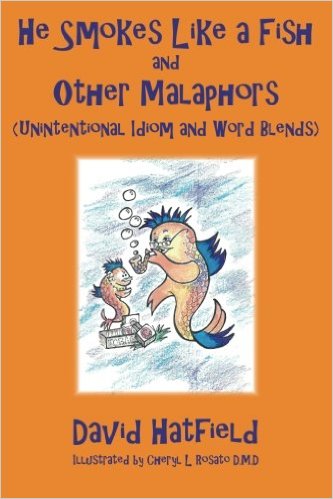
Introducing my new malaphor book, “Backseat Quarterback: Malaphors From the Sports World”
Posted: December 20, 2025 Filed under: Uncategorized | Tags: backseat quarterback, expressions, humor, language, malaphors, mixed idioms, words Leave a commentInstead of a weekend malaphor, I am unabashedly promoting my new malaphor book, “Backseat Quarterback: Malaphors From the Sports World”. It is available on Amazon NOW for a cheap $10.99 (Kindle version 4.99)! If you have Prime, it can arrive before Christmas! Click on the cover picture below.
Every bathroom library deserves this gem. And what better way to celebrate the Super Bowl than ordering this sports filled idiom mashup book? Even the cover is Stillers black and yellow!
Special thanks to Cheryl Rosato again for her fantastic illustrations that make the book so special. Also special thanks to Karen Michener MacDonald and Ron MacDonald from Step2branding.com for the terrific design of the book. And thanks to the many followers who contributed to the malaphors contained in this edition, and who are thanked at the end of the book.
You are all the top of the notch!
Does that name ring a distant chord?
Posted: December 17, 2025 Filed under: Uncategorized | Tags: Countdown with Keith Olbermann, expressions, humor, language, malaphors, mixed idioms, Vince Shlomi, words 1 CommentKeith Olbermann, on his podcast, Countdown with Keith Olbermann, was talking about Vince Shlomi, also known as Vince Offer. He asked his audience if the name rang a distant chord. You can hear this at 37:04:
https://podcasts.apple.com/us/podcast/countdown-with-keith-olbermann/id1633301179?i=1000740161415
This is a mashup of “strikes a chord” (affects someone’s emotions) and “rings a bell” (sounds familiar). “Chord”, “bell”, and “ring” are all music related and hence the mixup. Props to Frank King for hearing this one and sending it in!

New Malaphor Book!!
Posted: December 14, 2025 Filed under: Uncategorized | Tags: backseat quarterback, expressions, humor, language, malaphor, malaphors, mixed idioms, words 1 CommentComing real soon! The third and maybe best malaphor book is about to hit the streets. This one is a real page burner and you’ll want to read it from front to cover. New illustrations from that dental artist Cheryl Rosato! And a review of all the Malaphors of the Year for the past 10 years. Stay tuned!

We are flying without a net
Posted: December 8, 2025 Filed under: Uncategorized | Tags: blended idioms, expressions, humor, language, malaphors, mixed idioms, words 5 CommentsThis was heard in a conversation about medical treatment without data to rely on. It is a mix of “flying blind” (working on intuition or guesswork instead of data) and “working without a net” (to take action that is risky or otherwise does not provide safety). Almost a congruent conflation but not quite, but both idioms involve working without any certainty. The speaker may have been thinking of flying acrobats with no net underneath. A big thanks to Tom Justice for sending this one in!
A thorn in my butt
Posted: December 5, 2025 Filed under: Uncategorized | Tags: expressions, humor, language, malaphors, mixed idioms, words 3 CommentsThis was overheard in a work conversation: “this has been a thorn in my butt for years now.” It is a congruent conflation of “thorn in my side” and “pain in the butt”, both meaning something or someone is a source of annoyance or trouble. “A thorn in my paw” might also be in play here. Mixing body parts with thorns seems like a common thing – see past malaphors “thorn in the eye”, “thorn in the heel”, “thorn in the foot”. https://malaphors.com/2023/09/15/defense-has-been-a-thorn-in-the-seahawks-heel-today/ https://malaphors.com/2022/01/22/hes-definitely-a-thorn-in-their-eye/ https://malaphors.com/2013/03/21/its-a-thorn-in-the-foot/ A big thank you to Donna Doblick for sharing this one.
Did you enjoy this one? Why not get a malaphor book (or two) as stocking stuffers this holiday season? They fit in a standard stocking and are cheap – Get them on Amazon here https://www.amazon.com/dp/0692652205
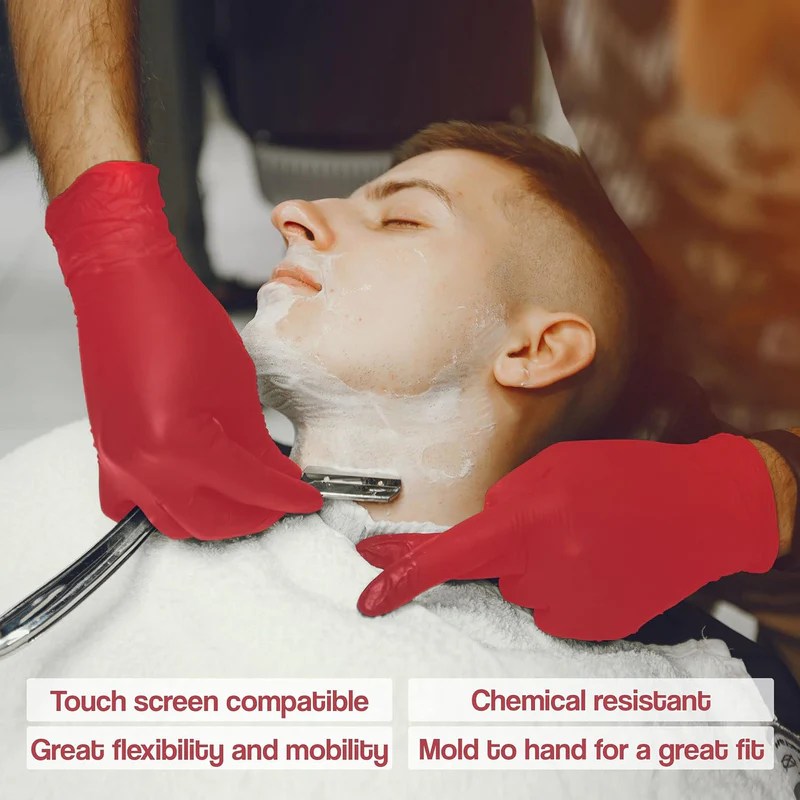
We received the red glove treatment
Posted: December 1, 2025 Filed under: Uncategorized | Tags: expressions, humor, language, malaphors, mixed idioms, words 1 CommentI unintentionally said this over the weekend after being entertained for Thanksgiving. It’s a congruent conflation of “white glove service” and “roll out the red carpet”, both meaning to receive premium service and treatment. There was no infra red therapy involved.
I’m not going out of my day to pull stuff up for you guys
Posted: November 24, 2025 Filed under: Uncategorized | Tags: expressions, humor, language, malaphors, mixed idioms, words Leave a commentThis one was seen on X, formerly known as Twitter. It’s a congruent conflation of “not going out of my way” and “not taking time out of my day”, both meaning to not make a special effort to do something. A big thank you to Kris for spotting this subtle one and sending it in.
People are having trouble keeping their nose above water
Posted: November 21, 2025 Filed under: Uncategorized | Tags: Abby Phillip, cnn, expressions, humor, language, malaphors, mixed idioms, Scott Jennings, Trump, words Leave a commentThis was heard on CNN’s Saturday Morning Table for Five with Abby Phillip. Scott Jennings was defending Trump as usual but also acknowledging high prices, and how people are having a hard time making ends meet. He then made the above statement. This is a mashup of “keeping (one’s) head above water” (able to just manage, usually referring to finances) and I think “keeping (one’s) nose clean” (stay out of trouble). The word “trouble” probably caused the mental hiccup, with Jennings reaching for “nose” instead of “head”. He may also have been visualizing a dog swimming with the nose extended out of the water. A big thanks to Kathy Meinhardt for hearing this one and sending it in!


 Malaphors
Recent Comments